Saturday, September 10, 2016

Dear God,

At the end of each chapter of The Good and Beautiful Life, James Bryan Smith includes a Soul Training exercise.  The idea is to engage in spiritual practices that relate in some way to the content of the chapter.  Some of these spiritual practices are familiar ideas related to prayer, offering service, and keeping the Sabbath.  But others are a bit  more unconventional, such as play and de-accumulation as a spiritual practice.

In his first chapter, Smith invites us to write a letter to God.  He encourages us to begin with the words, "Dear God, the life I want most for myself is..."  In the letter, we are sharing with God our ideas about what a "good and beautiful life" would look like for us.  "Feel free to dream big," Smith writes. "Let God in on your greatest hopes."
Source
In our Living Stones meeting, some of us shared our letters aloud, and we all discussed our feelings about the process.  For some, it came naturally to express prayer in writing; for others, it was a difficult task to commit thoughts and feelings to the page.

There is no right or wrong way to write a letter to God.  It is essentially a written prayer, and will reflect your thoughts, needs, and concerns.  I invite you to try this Soul Training exercise.  Some people write a letter to God every day as an approach to a daily journaling practice.  For others, it might be an isolated exercise that can still give us guidance and inspiration about our lives and our relationship with God.

Here are two letters written to God by members of our Living Stones group, shown here to give you two examples of the innumerable ways we can address ourselves to our Creator:

Letter #1

Dear God,
The life I want most for myself is the life You have created for me. I want to be the person You created me to be. I want to be a woman of integrity--a woman whose insides match her outside--whole, honest, and authentic.

I would love to stop caring so much about what other people think of me, but until I manage that, I want to be seen as strong, faithful, honest, kind, compassionate, and creative. I want to be valued by my family for who I am and for what I do.

I want to raise daughters whose lives reflect the values I try to teach them--as well as the values present in Jesus' teaching that I fail to teach them.

I want a life filled with friendship, humor, joy, memory-making, and optimism. I want to live my life with a daily awareness that I am Your beloved child, and that I am surrounded by all Your other beloved children.  I want to treat others gently, and I want to be treated gently.

I want a life where the work I do, the service I provide, makes a positive difference for my family, my friends, and my community. I want to inspire creativity, and lead people to understand the beauty of a life lived in communion with You. I want to take care of all the blessings You have provided me, to be a good steward of my resources: my home, my body, my children, my husband, my friends, my church community, and my world.

I'll say again at the end what I said at the beginning: I want to be the person You created me to be. I want to live in the light and joy of Your love, and feel Your presence, protection and guidance.

Letter #2

Dear God,
The life I want most for myself is a life full of peace and joy. This life would be free from worry and anxiety.

In order to have the good and beautiful life, I need to learn and grow from my mistakes in the past such as: trying to control the situation, trusting myself more than You, and succumbing to the gentle whispers of negative thoughts and temptations from the devil.

In order to achieve this I will need to call on the power of the Holy Spirit and turn to prayer or scripture in moments of doubt or temptation. I can only do this with your help.

Thank you for always loving me. All glory, praise, and honor are yours.

******************************************
In my next post, I will share with you our Living Stones discussion points for chapter 2 of Smith's book, "The Gospel Many People Have Never Heard."

Tuesday, August 30, 2016

The Good and Beautiful Life: Chapter 1

NOTE: This series of posts will provide the questions and discussion points used during our Living Stones meetings to talk about James Bryan Smith's book, The Good and Beautiful Life: Putting on the Character of Christ. Please use them to review our conversations, or to guide your own thinking as you read the book on your own. You can follow this link to the post about the book's Introduction. Feel free to share your questions or comments on the blog or by email to aleakaskey@yahoo.com.
Source
In chapter 1, we meet Ben Jacobs in the retirement center. He has lived a life of wealth and influence, but feels he has ruined everything because of his selfishness and sin. Ben thought he was pursuing happiness, but he had the wrong idea about what success and happiness are (page 20).

  • What is the world's narrative of the good and beautiful life/ the successful and happy life?
  • Can you name some people living the good and beautiful life according to these narratives?
Jim tells us that the stories we live by determine the outcome of our lives. People like Ben Jacobs live false narratives of success. "Each day we make decisions that move us closer to a life of virtue or vice. We face decisions whether to be greedy or generous, self-centered or self-sacrificing, condemning or forgiving, cursing or blessing" (page 27).

When it comes to people ruining their lives and getting caught in the downward spiral into sin, Jim says sin is always ugly and virtue is always beautiful (page 24).
  • Why, then, is sin so able to lure us into its illusion of happiness?
Coach John Wooden is a counter-example to Ben. He chose a different narrative to practice each day. And it was a narrative closely reflected in the life of Jesus. When we examine how Jesus thought, we can adopt His narratives--which means we understand God, the world, and ourselves as Jesus does. That's powerful!

Read Matthew 7:24-27.
  • What does it mean to build your house (your life) on rock as opposed to on shifting sand?
Source
Jesus isn't demanding that we live His way in order to get His blessing or to get into heaven. And He isn't offering His teachings just to make us have a bunch of rules to follow. In fact, he's just telling the truth about reality. He warns against lust, not because He's a prude, but because He knows it destroys lives when it is unchecked (page 30). He wants us to have the tools to live the best and most beautiful life possible.

"The idea that following Jesus' teaching will lead to a boring life is one of the most effective narratives employed by the enemy of our souls" (page 31).
  • How have you experienced Satan's use of this strategy, in your own life or in the lives of others?
On page 32, Jim emphasizes that no one--no even his friend Ben--is past redemption. We are always able to change when necessary. Every day we begin anew--making decisions about how we will think, speak, and act that day.
  • When in the past have you felt the possibility for change most fully?
  • What truths from this chapter could you draw on to inspire you that change is possible?
Prayer
Heavenly Father, help us to remember that You have loved us from the beginning, that we don't have to do anything to earn Your love. Allow us to live in the freedom of that feeling. At the same time, help us to be open to the work of the Holy Spirit's leading, encouraging, and transforming. Help us to feel both hopeful and certain that You are at work in our lives, and that You will bring Your good work to completion. May we be open to being changed, and then used to change the world. In Jesus' name we pray. Amen.

***********************************************************

At the end of each chapter, Jim presents a "Soul Training" exercise. At the end of this week, I will post the Soul Training from chapter 1.  


Tuesday, August 23, 2016

The Good and Beautiful Life: Introduction

Source

NOTE:  As the Living Stones Women's Ministry studies The Good and Beautiful Life: Putting on the Character of Christ, by James Bryan Smith, I am going to be posting the questions and discussion points I use for our twice-monthly conversations about the book.  These posts will serve as reminders of our meetings for those who have attended, and will allow anyone who has not been able to attend to follow along with the things we have been talking about.  I hope that reading these discussion points will encourage you to spend time with this book in order to learn more about putting on the character of Christ!
Introduction

How does Jim describe the good and beautiful life in these opening sections of his book? What makes for a good and beautiful life?

Virtue lies at the heart of the good and beautiful life. What are the connotations of that word today? What does Jim use it to mean?

In the introduction, Jim says his book contains "a method of growth toward a virtuous life" (10). But he reminds us a couple of times of the very important truth that we aren't living this virtuous life to get into heaven. Everything that needs to be done to bring us close to God has already been done by Jesus on the cross. It's important to remember as we read this book that we don't have to do anything to merit God's favor. We have God's favor already through Christ.

If that's the case, then what is the point of reading books like this one, with exercises for drawing close to God?  Some points to consider:
--knowing God now, not just in heaven
--learning to live as Jesus taught
--sanctification: God's goal for us, to be holy like Jesus is holy
--cooperating in God's work; allowing Him to work in us

Jim also reminds us that the Holy Spirit is the real agent of change within us. We need to engage with the Holy Spirit as we read this book, welcoming its leading.  "If not for the work of the Holy Spirit, transformation simply will not take place" (12).

Jim writes, "I encourage you to proceed with hope and certainty that you are engaged in something that can make a positive difference in your life. I am confident that God, who has begun a good work in you, will bring it to completion" (14).
Source
I will post again next week with the discussion notes from chapter 1.

Saturday, May 7, 2016

7 Things Kids Need to See Their Mom Doing

I often add pins with interesting headlines to my Pinterest boards with the intention of coming back to read them later.

On Friday evening, I decided to go through some of the pins on my Parenting board to determine if they were "keepers," or if it was time to "clean house."  I saw a pin entitled, "7 Things Kids Need to See Their Mom Doing."  I had this sudden burst of inspiration that I should come up with my own list of 7 things my girls should see me doing before consulting the article to see the writer's opinions.

Here is my personal list:

 7 Things My Kids Need to See Their Mom Doing:
Source
1.  PRAYING:  I want to be an example of prayer for my girls.  I want them to see me turning to God for my daily strength.  I want to model for them how I turn to God when I am sick, sad, hurt, thankful, joyful, or irritable--how I feel comfortable taking every emotion to God.  By showing them my faith in God to stay with me and comfort me in all times and during all emotional up- and down-turns, I want to provide a model for them for their own lives.  I want them to know that I feel closer to God by turning to Him, by talking to Him, and by trusting in Him.

2.  THANKING:  I want my girls to see that I recognize my blessings.  I want to model for them how I recognize all the good things in my life.  And I especially want them to know how thankful I am that God has made us a family!

3.  LEARNING:  I don't have too many pithy sayings that I hope my kids will quote as they grow up, but there is one that I say whenever I can:  "It's a good day when you can learn something new."  I value a teachable spirit above just about anything else, I think, and I love to continue learning new things every day of my life.  I want them to see me learning all the time, so that they will feel comfortable "not knowing," and then inspired to learn all that they can each day of their lives.

4. LOVING: I want my girls to see me loving them and their daddy throughout their lives.  I want them to observe affection, so they know that they deserve the same in their own relationships when they are older.  (Though even at age 7, Bayla already says things like, "Eww, Mommy and Daddy KISSED!" as though the little peck on the lips she's observed is the grossest thing she's ever seen.)

5.  APPRECIATING:  I want to present a positive attitude about myself and my abilities to my girls.  I don't want to raise them thinking that they need to be self-deprecating or self-degrading in order to "come off" as humble.  I want them to recognize their God-given gifts, and envision how they can use them for God's glory, so they need to see me doing the same.

6.  PURSUING:  I want my girls to see me pursuing my interests, my hobbies, and the things that bring me joy.  There are things that have to be done in life--jobs, requirements, duties.  But I never want my girls to lose sight of the hours in the day they can preserve to pursue what is important to them, what uses their unique and individual gifts, what sets them on fire.  They might not learn that as easily if they don't see their mom making time for it!

7. ENCOURAGING: No matter how anyone else in the world treats my girls, I want them to know that I am their #1 fan.  I always felt this affirmation from my own mom, and it made such a difference in my confidence for facing the challenges of life.  I want to gift my girls with that same sense of encouragement.  They are beloved children of God, and they are my own beloved children--the absolute treasures of my life--and I never want them to forget their absolute and eternal value.

So, of course, then, I went to the article that I pinned to see the author's "take" on the 7 Things Kids Need to See Their Mom Doing.

Now, you can check out the article I pinned to see how that author's ideas compared to mine!

Happy Mothers' Day!
Source

Friday, May 6, 2016

Perfectly Imperfect

I wrote the following article for my church's weekly e-newsletter, MPC This Week.  I will be following it up with some related posts here on the blog.
****************************************
Source
Perfectly Imperfect

When I was a teenager, I decided to try going to Youth Group at a local church. 

In my mind, I think that I expected to find a “better sort” of teenager there.  After all, they went to church and loved God, didn’t they?  So, it followed that they wouldn’t have cliques or make people feel excluded.  They wouldn’t cuss or make bad choices.  They would be the kind of kids I wanted to be—perfect kids—and they would help me get there myself.  Right?

As you might imagine, they did not, in fact, turn out to be perfect kids.  They had cliques and made people feel excluded.  They cussed and made bad choices.  They turned out to be actual real teenagers—real people.  So I stopped going to Youth Group.

I was too young and immature to understand the bumper sticker wisdom that states, “Christians aren’t perfect, just forgiven.” I missed out on all the ways I could have been blessed by those perfectly imperfect young people.  I may have lost faith in that small community of Christians back in high school, but I never lost faith in my relationship with God.  He worked in my heart to help me understand that my hope is not found in perfect and exemplary behavior—not my own, or anyone else’s.  Rather my hope is in the Lord. 

“But now Lord what do I look for?  My hope is in you.” Psalm 39:7

Again and again, in the small groups I belong to, the subject of vulnerability has been raised.  We want to feel free to be vulnerable around our church family members, to reveal our true selves with the veneer of “having it all together” cast aside.  But we aren’t sure that we have found a safe place to reveal ourselves with full honesty, to acknowledge truthfully that we aren’t a “better sort” of person, but rather broken people held together by Christ’s amazing grace.

I turned my back on those teenagers so many years ago because they didn’t meet my unrealistic expectations.  Many of us probably hope that we are too kind, generous, and spiritually mature to make the same kind of mistake I made at age 14.  We like to think that others can be vulnerable around us—honest and open with their true selves—but are we sure we can provide that safe place?  Satan well knows how quickly we fall prey to tendencies to judge, gossip, and condemn.  Can we handle the vulnerabilities of our brothers and sisters in Christ? Our Elders? Our pastors? The worshiper in the pew ahead of us?

“I abuse prescription drugs.”

“I was unfaithful to my wife, and she has filed for divorce.”

“My children are totally out of control, and I don’t know what to do.”

“I am sick, and so very afraid to die.”

“I am an alcoholic.”

“My daughter doesn’t trust me around the new baby.”

“Sometimes I don’t believe there is a God.”

“I’m so lonely.”

Christ Jesus came into the world to save sinners: to save me and to save you (1 Timothy 1:15). His strength is made perfect in our weakness (2 Corinthians 12:9).  In all of our imperfection, God adopted us into His family as His children (Ephesians 1:5). 

Christ is our example of loving, of serving, of providing a safe place for sinners, just as we ourselves as sinners desire a safe place.  We are called to accept one another, then, just as Christ accepted us (Romans 15:7). 

This week I am going to invite the Holy Spirit to continue His work in my heart so I can  recognize that my hope is in the Lord, that my brothers and sisters in Christ deserve better than my unrealistic expectations, and that I can lead the way in creating the safe place that we “perfectly imperfect” followers of Christ are craving.   Will you join me?

Friday, April 29, 2016

Word for the Year: April Meet-Up


Our Word for the Year group recently had our second meet-up of the year to check in on our progress with having a special word selected to guide and direct our year.
Rather than meeting up at church, like we did in January, one of our members Mindy hosted us in her home.  A total of eight women participated, and we enjoyed snacks and conversation as we shared about our experiences with our words.
Our group members' words include:  commitment, contentment, dis-CONNECT, reconnect, and vulnerability, We talked about how helpful our words have been, how much attention we have paying to them, and whether keeping our word in mind over the months is having a positive impact on our year.
Then we brought out the art supplies!
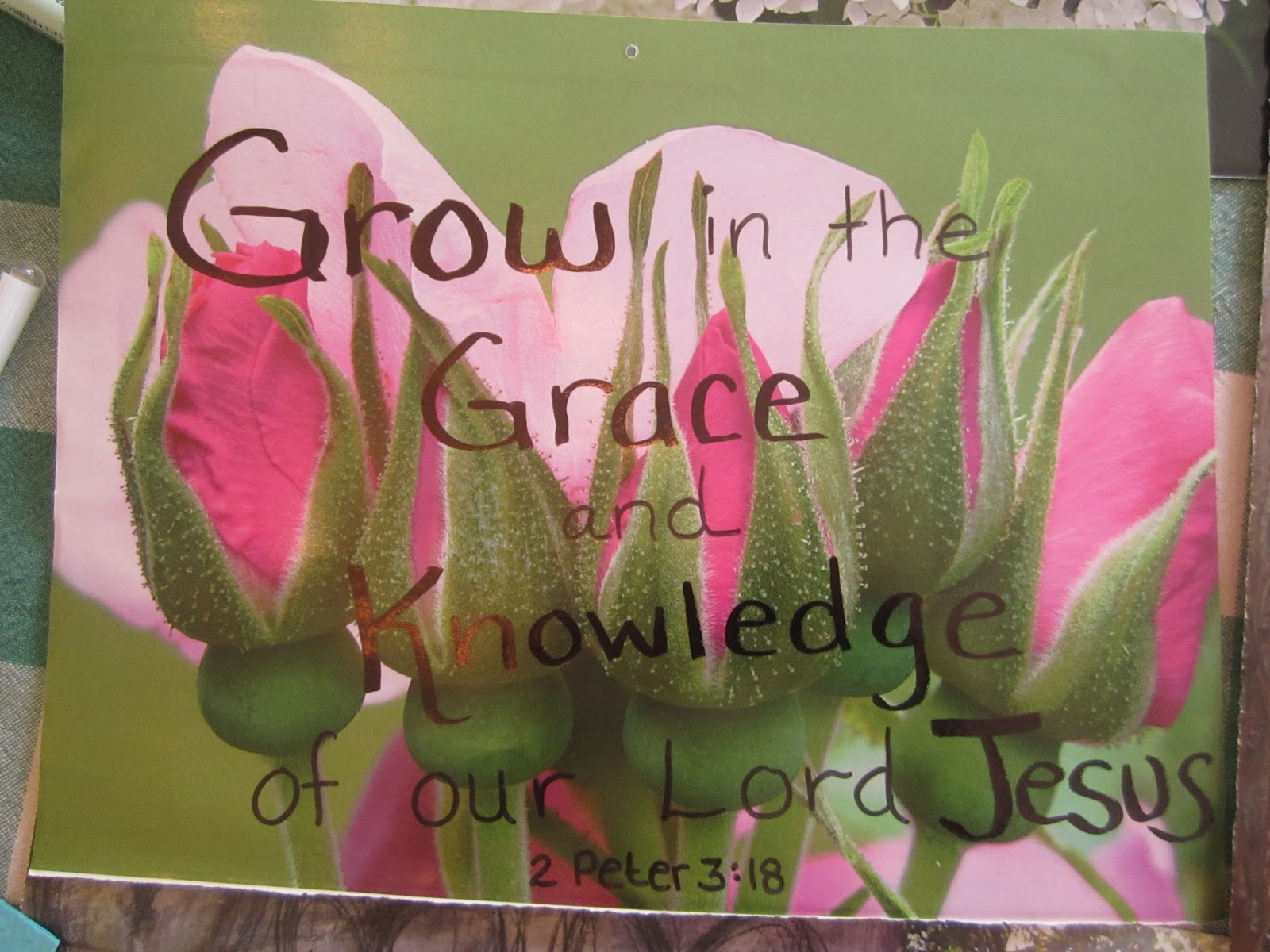
I brought a stack of full-page illustrations from magazines, calendars, and catalogs, and we used them to create a full-page visual aid to remind us of our word for the next few months.  We could use the page to define our word, collect quotations about our word, reflect on how our word is helping us--however we wanted to use the space.
When we finished, we each shared our illustrated pages, and talked about where we might put them so that they can continue to remind us of our commitment to our word for the rest of the year.
Here's a little gallery walk through the pages, so you can read our thoughts more clearly:
We are continuing our commitment to emailing our partners with an inspiring or encouraging word at least once a month.  And we will continue to receive prompts over the months to engage with our words through writing or projects.  Those who are interested may journal to keep a record of their experiences and feelings over the course of the year so that they can track their progress toward their goals.

Our next meet-up will take place in July, so we can fellowship face-to-face again, and continue to encourage one another with this year-long experiment.

In closing, I leave you with this inspiration, given to each of us as a gift by our Word for the Year partner, Blaire:

Saturday, April 23, 2016

Spring Mission Project: Personal Care Kits

For our spring mission project, the women of Living Stones have purchased personal care items to create kits to deliver to the Media Food Bank.

The items we have included in our kits are important health and hygiene products that cannot be purchased with SNAP benefits (more commonly known as "food stamps").  These items can be quite pricey for individuals to purchase, and yet can make a big difference when it comes to their health and being presentable for personal interactions and job interviews.
We chose to include the following items in each personal care kit:  shampoo, conditioner, lotion, razor, dental floss, toothpaste, toothbrush, a washcloth, cotton swabs, two rolls of individually wrapped toilet paper, lip balm, deodorant, and a bar of soap.

Over half of our group participated financially in supporting this project; one member completed the shopping, with two members offering donations of items; and then three of us assembled the bags.
We had some help from our littlest members as well!
I am also very excited and pleased to report that my supermarket, Giant, agreed to contribute the tote bags free of charge!

The women of Living Stones have created eleven personal care kits, while women in Bible studies and circles of Media Presbyterian Church will create nine additional kits.  We will be able to donate twenty personal care kits total to the Media Food Bank.
Tana, Julie, and I celebrate putting the kits together for delivery!
I want to thank everyone who has participated in this spring mission effort, as well as challenge others to consider how they might contribute to the health and well-being of their communities through similar efforts.
Source
Related Posts Plugin for WordPress, Blogger...